Service
Acoustic Panel Cleaning
Specialist in-place cleaning and restoration of fabric acoustic panels across the UK. Low-moisture, plant-based methods that restore sound absorption and extend panel life.
Find Out More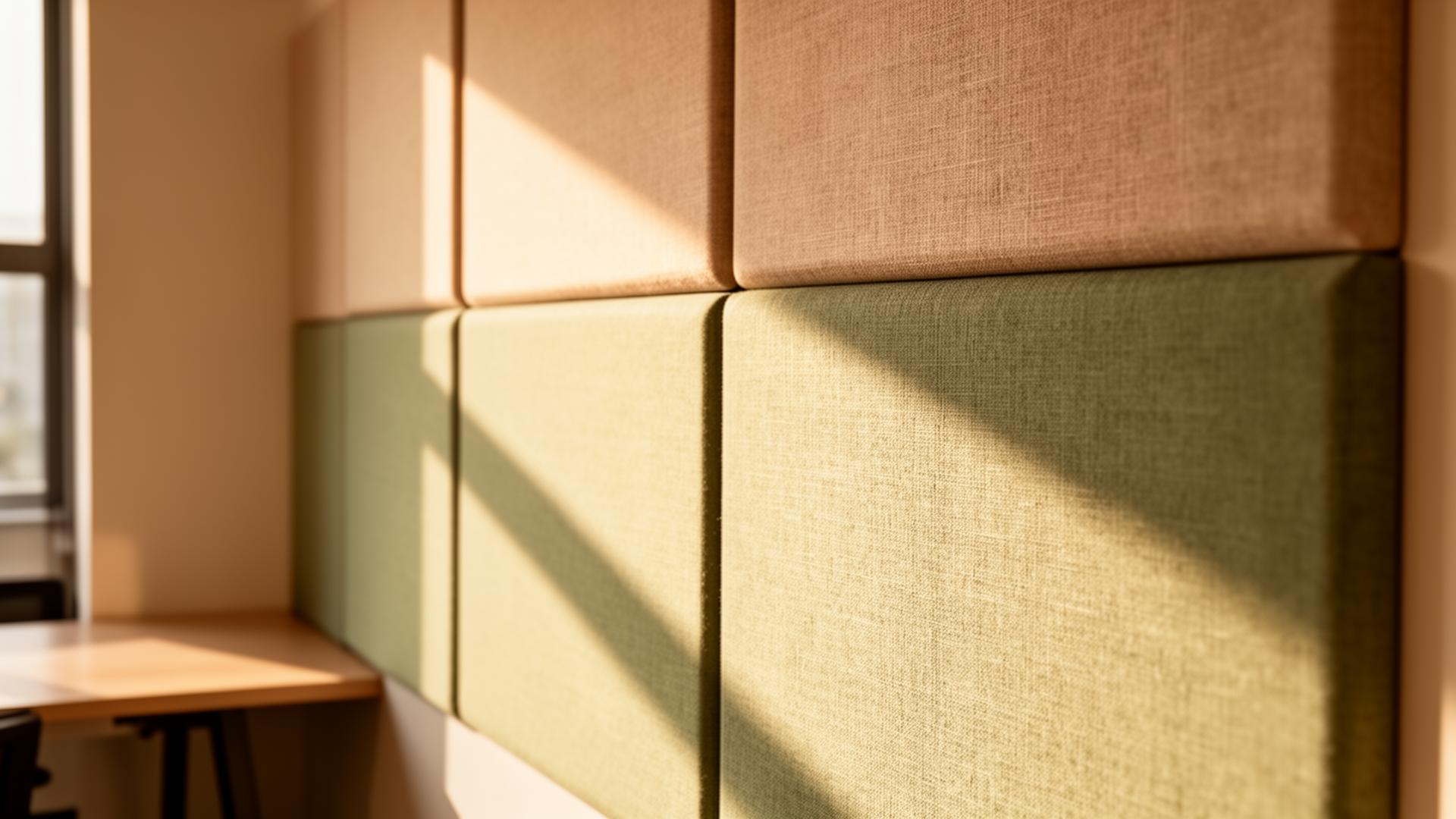
Dust degrades sound absorption. Stains trigger early replacement. Tired fabric undermines the space. We stop all three — without ripping a single panel off the wall.
Specialist in-place cleaning and restoration of fabric acoustic panels across the UK. Low-moisture, plant-based methods that restore sound absorption and extend panel life.
Find Out MoreCommercial chair and task seating cleaning for London & Home Counties businesses. Specialist fabric expertise, minimum 20 chairs, ready next working day.
Find Out MoreDust and airborne particles clog the fibres of fabric panels, reducing the very acoustic performance you paid a premium for. Meeting rooms get louder, calls get harder, and no one notices until it's bad.
Panels with years of life left get torn out and binned because they look tired. A full re-fit can run into tens of thousands — the vast majority of which is avoidable with proper maintenance.
Stained, dusty fabric in client-facing zones quietly says 'we don't care'. It pulls down the impression of an otherwise considered space — and it's the first thing visitors notice.
“Every year you delay maintenance, you’re paying for it twice — once in lost performance, and again when the panels get replaced years before they should.”
Acoustic panels live in a blind spot — too specialised for general cleaners, too small a job for fit-out firms. So they just degrade, quietly, until replacement feels like the only option.
Standard janitorial cleaning saturates fibres, flattens the weave, and damages the absorbing core. So nobody touches it.
Acoustic panels almost never appear on a cleaning schedule. They live in a gap between the cleaning team and the fit-out contractor.
There's no alarm when sound absorption drops 30%. By the time it's noticeable, the panels look bad enough to justify a full replacement.

Almost every acoustic panel pulled out of a UK office this year had years of life left in it. Here's what changes when maintenance becomes the default.
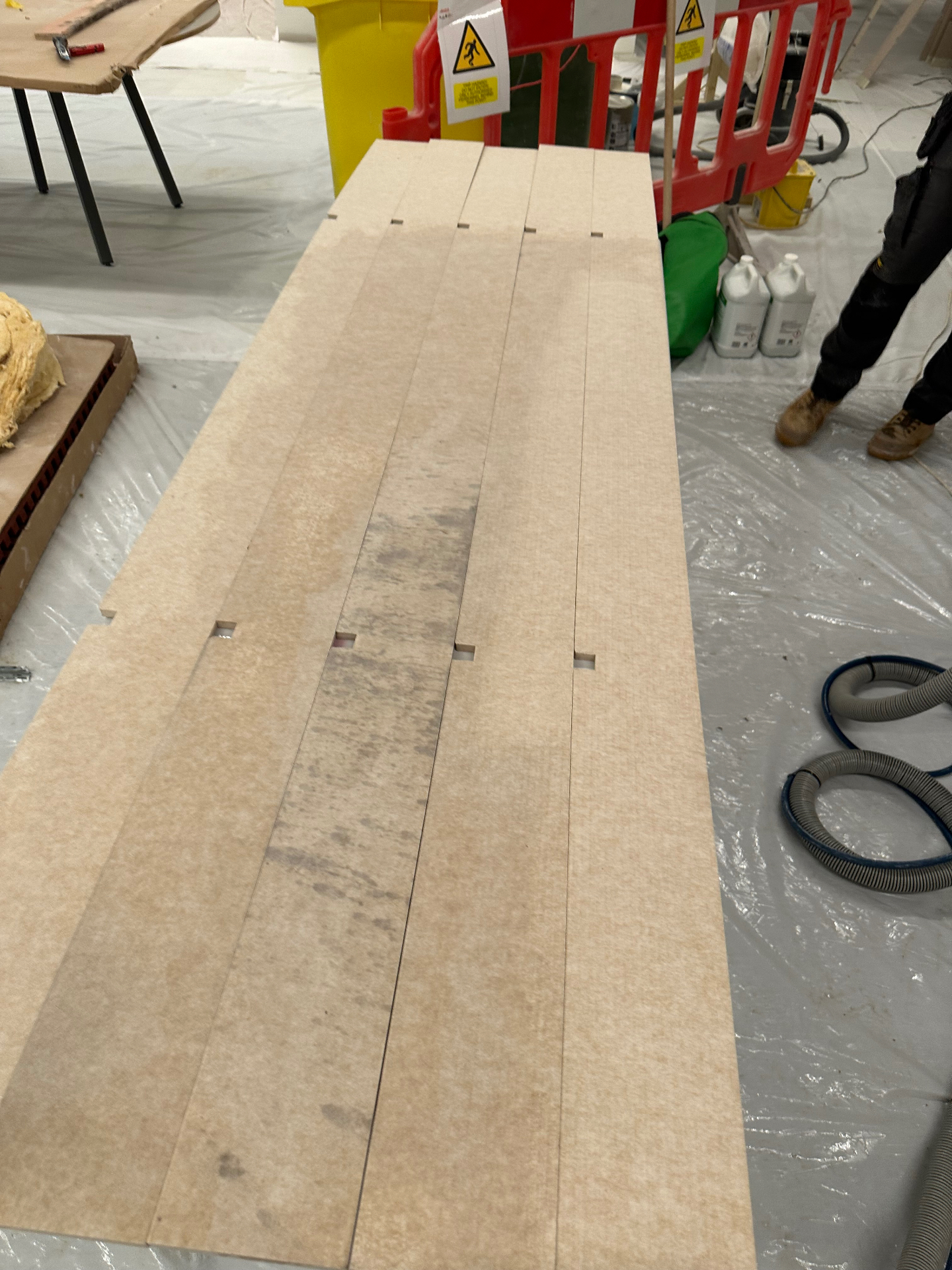 Before
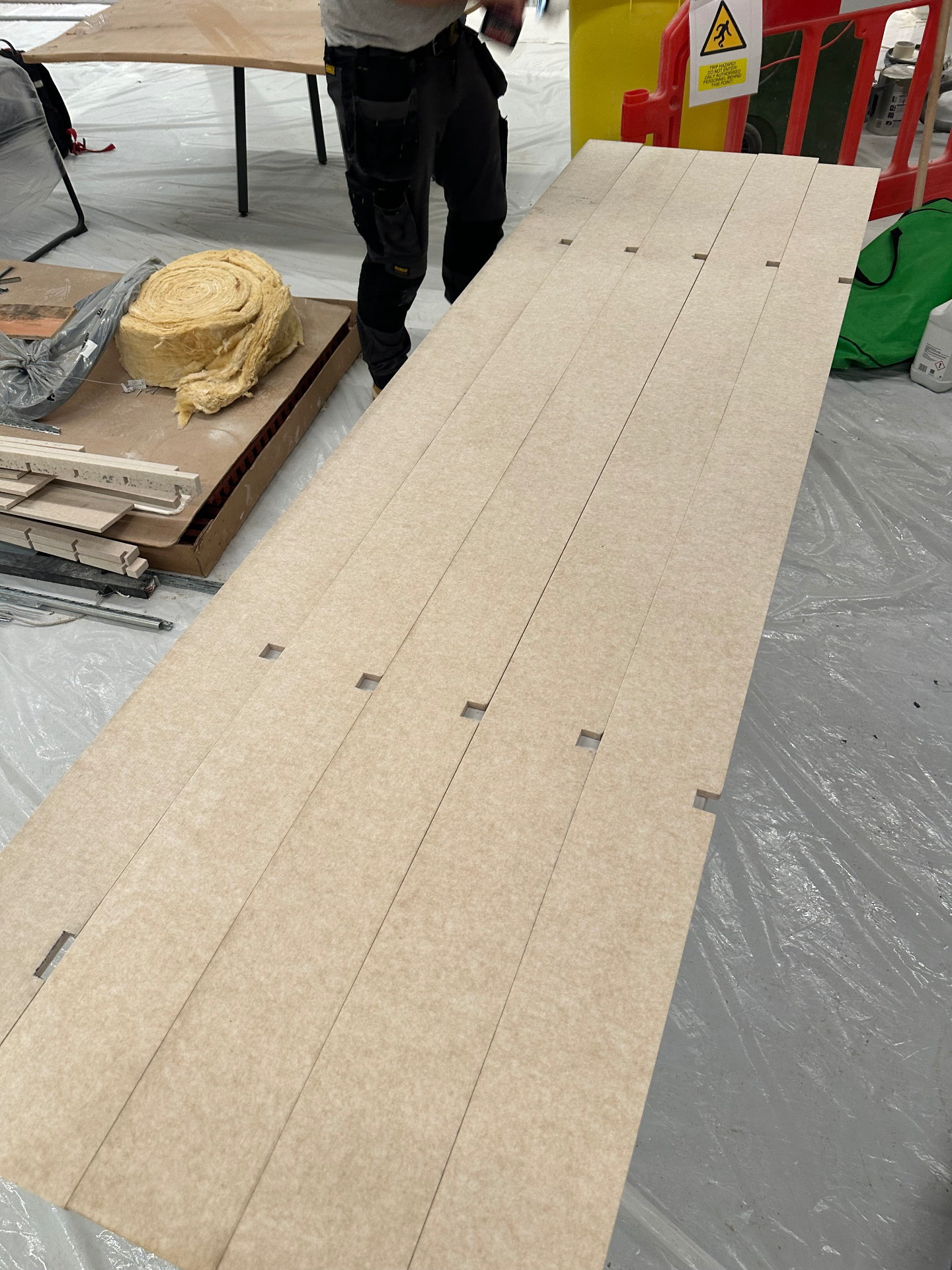 After
AfterWe walk the space with you, identify what's installed, and pinpoint the zones doing the most acoustic work — so the plan targets impact, not square footage.
Every panel is assessed for fabric type, soiling level, and condition. You get a tailored quote with clear scope, methods, and timescales before anything is touched.
Surface dust removal, targeted spot treatment, full-panel cleaning matched to the fabric, then drying and quality check — all low-moisture, often out of hours.
A maintenance schedule, before-and-after report, and care guidance so panels stay performing — and stay out of the skip — for years longer.
Every part of how we work — from the products to the transport — is chosen to keep panels in service longer and keep impact lower. It's the easiest sustainability win in the building.
Biodegradable formulas — tough on dirt, gentle on fibres and the people in the room.
We don't soak panels. Less water, less drying time, no acoustic core damage.
No harsh chemicals, no toxic fumes, no harmful residues left behind on surfaces.
Every cleaned panel is one less in the skip. Maintenance is the most circular option there is.
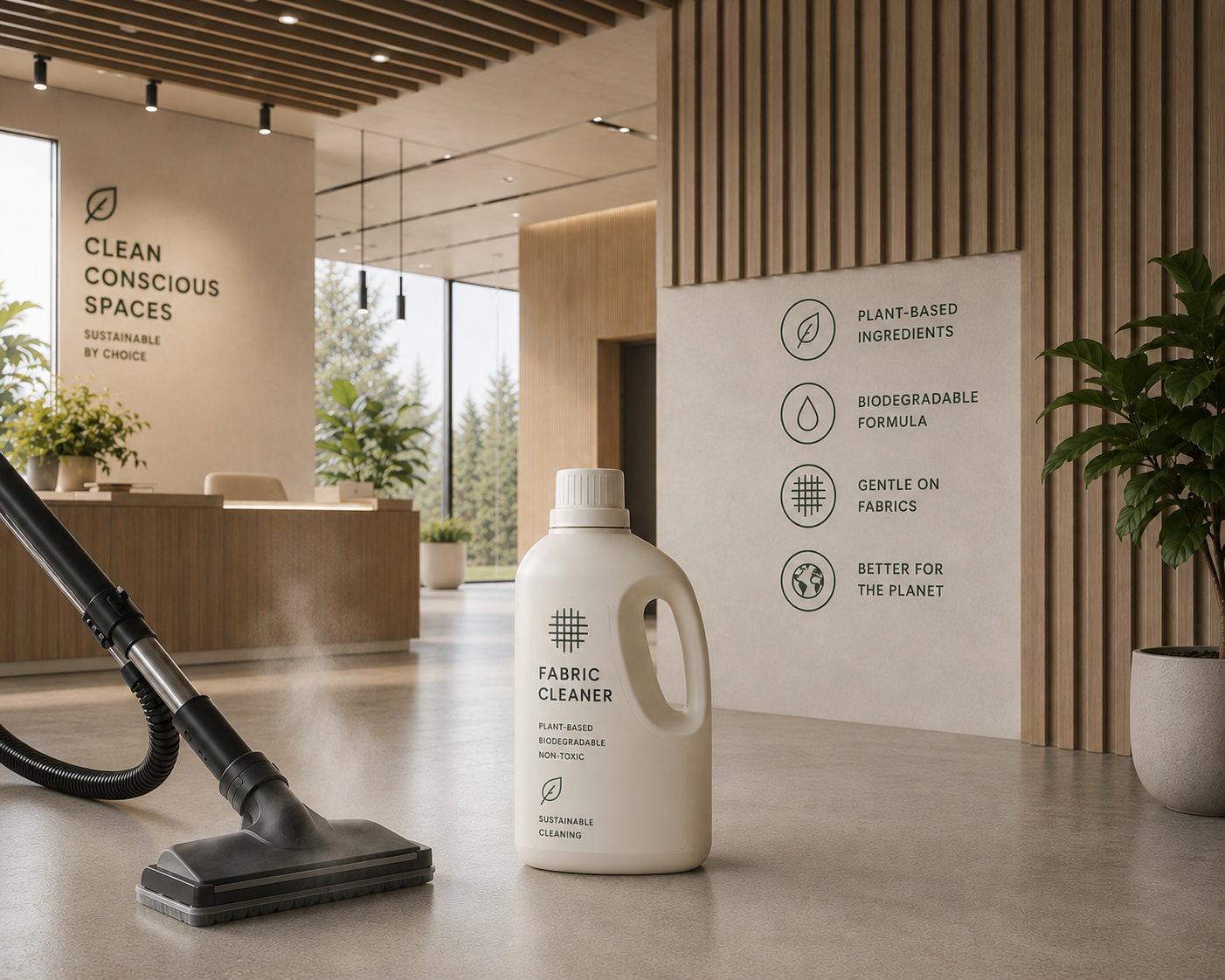
Corporate HQs, conference centres, and high-profile commercial spaces — cleaned with minimal disruption, restored without compromise.



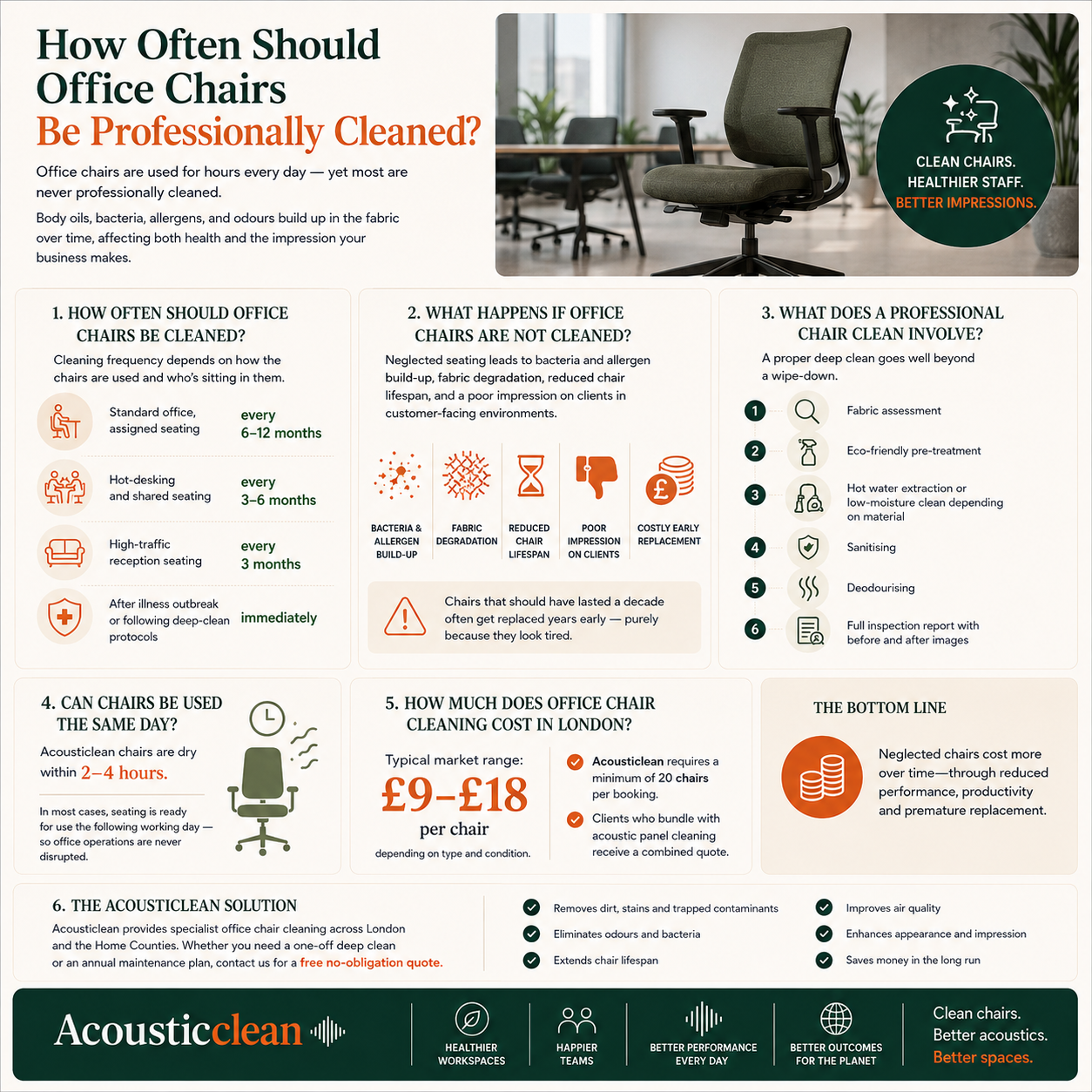
Office chairs are used for hours every day — yet most are never professionally cleaned. Here's how often London businesses should book a deep clean, what's involved, and how much it costs.
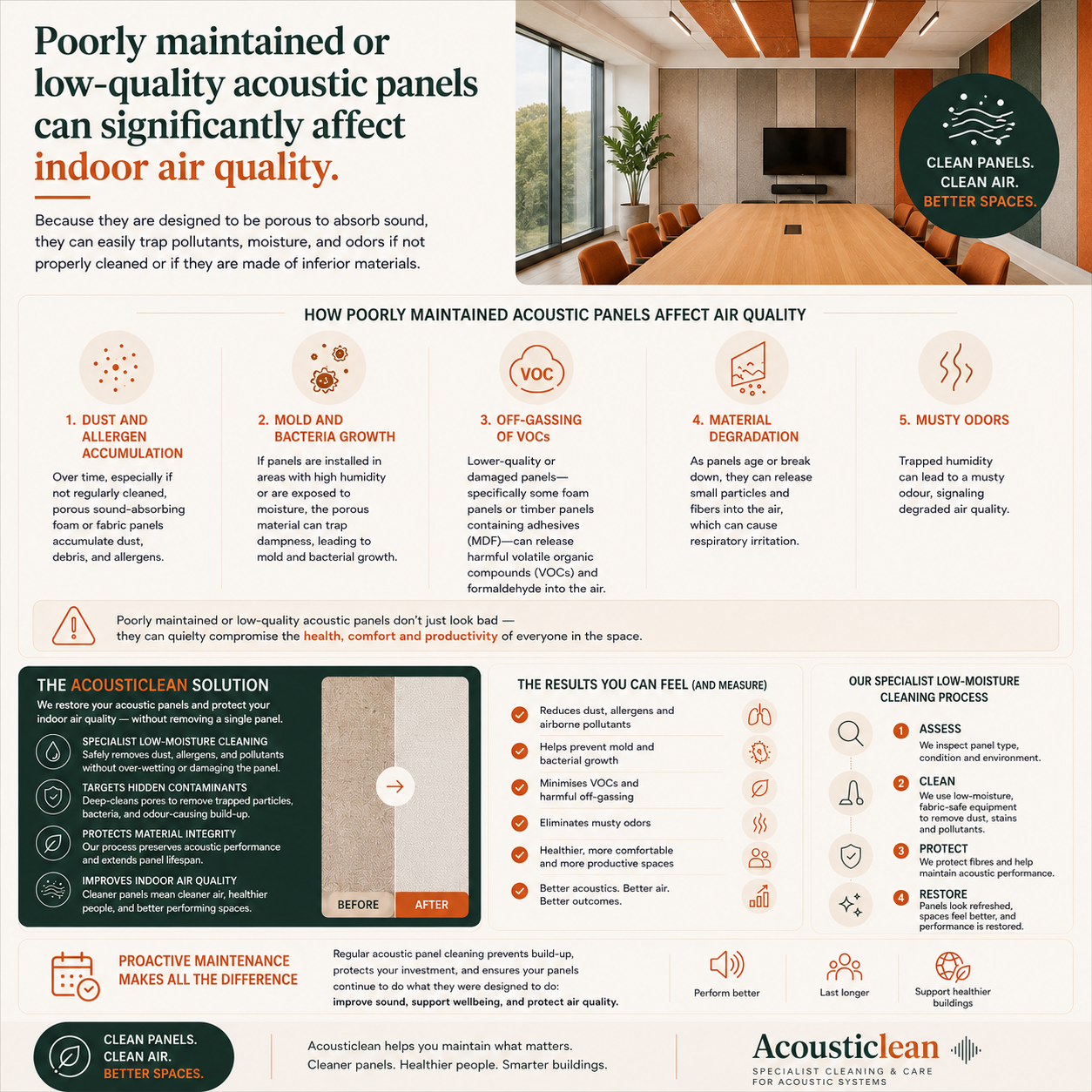
Acoustic materials are designed to be porous, so they quietly trap dust, allergens, moisture and VOCs. Here's how poorly maintained panels affect the air in your building — and what to do about it.
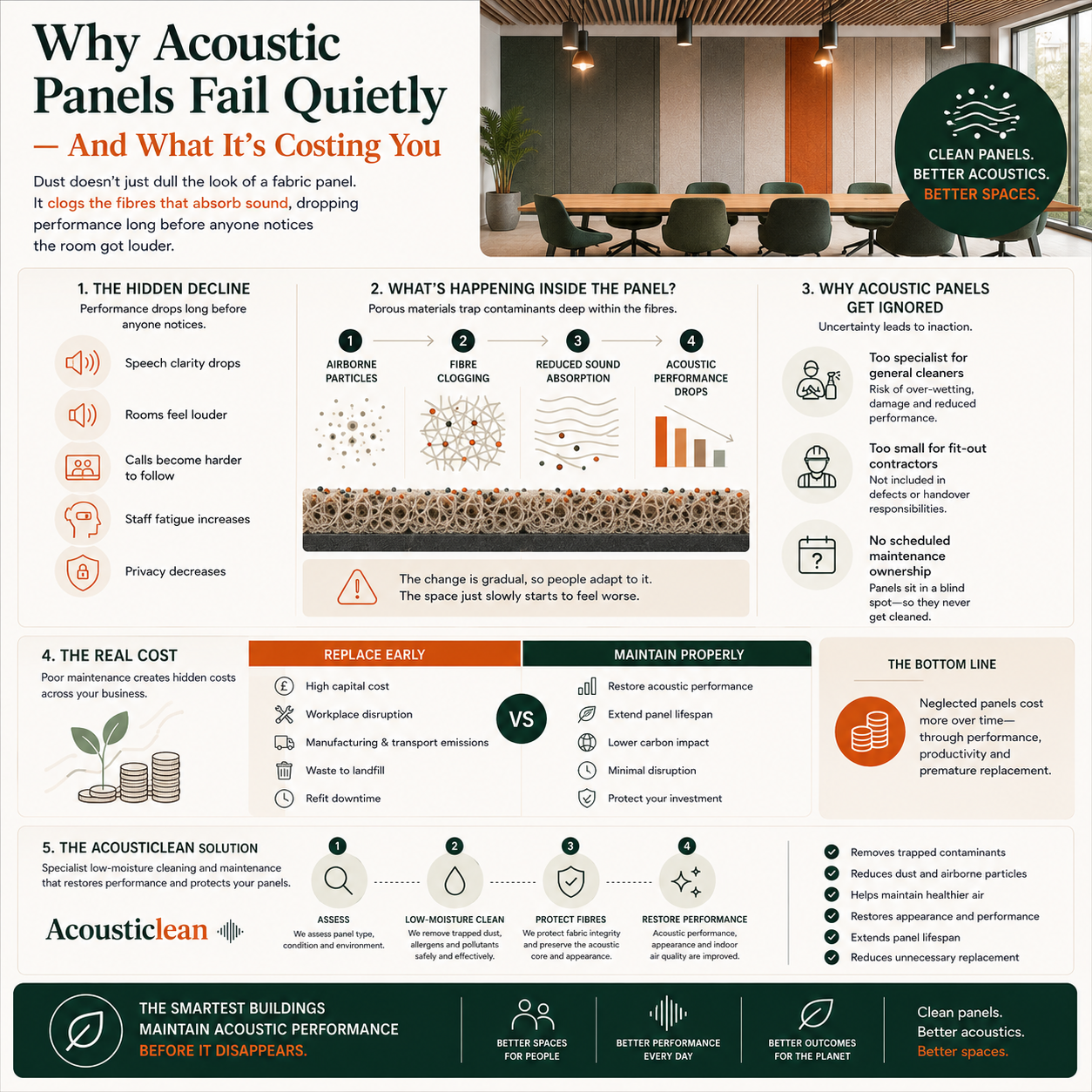
Dust doesn't just dull the look of a fabric panel. It clogs the fibres that absorb sound, dropping performance long before anyone notices the room got louder.
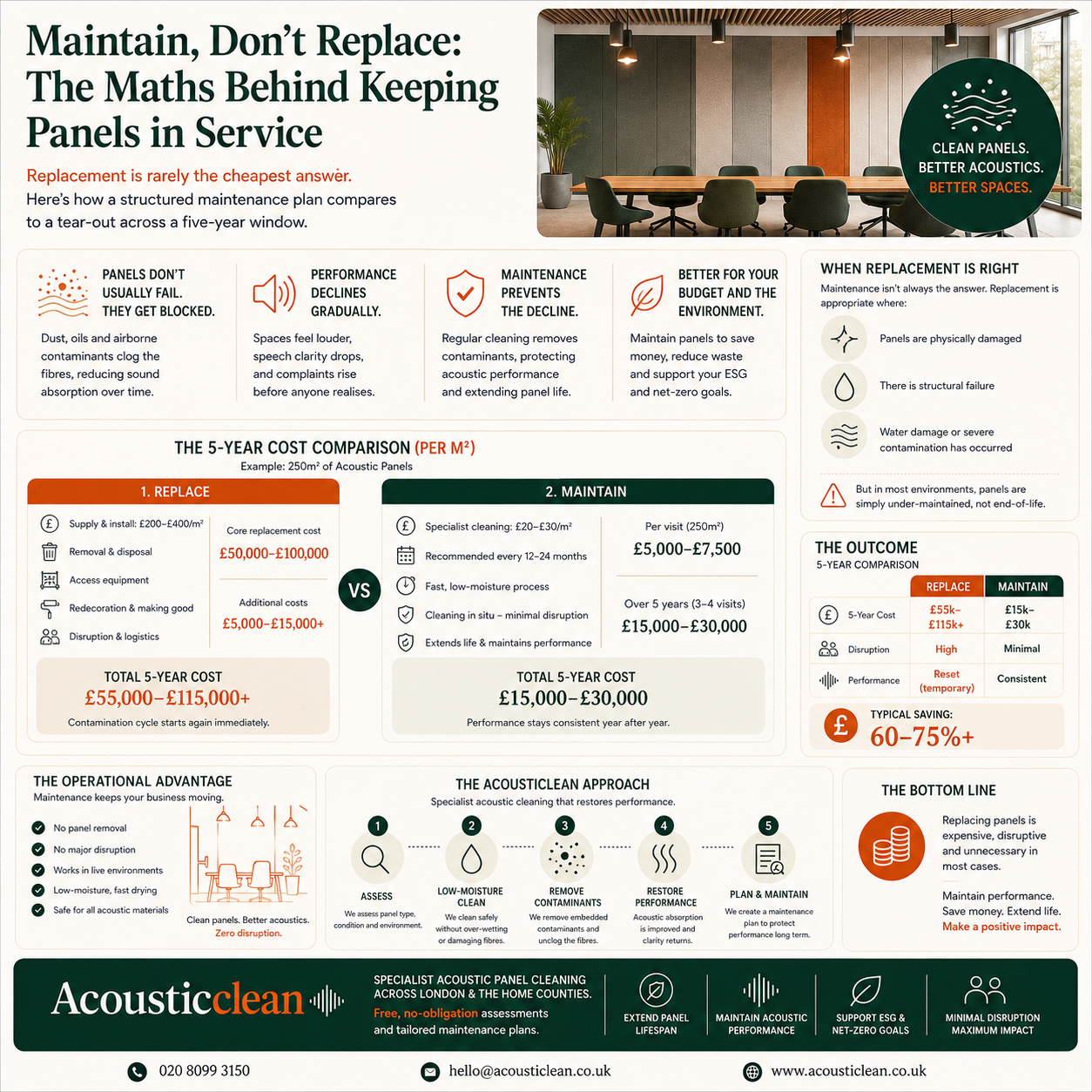
Replacement is rarely the cheapest answer. Here's how a structured maintenance plan compares to a tear-out across a five-year window.
For most offices and client-facing spaces, a light maintenance clean every 12 months keeps fabric panels performing and looking new. High-traffic areas, hospitality, and educational settings often benefit from a 6-monthly cycle. We'll tell you honestly what your space actually needs.
No — the opposite. We use low-moisture, plant-based methods specifically chosen for acoustic fabrics and the absorbent core behind them. Removing embedded dust restores the panel's original sound-absorption performance, which steadily drops as fibres clog up.
No. We clean panels in place. There's no dismantling, no risk to the install, and no downtime spent putting things back together.
Most projects are completed out of hours or over a weekend. Drying time is minimal because of our low-moisture process — typically the space is fully usable again within a few hours.
We work with clients across the United Kingdom, with a strong focus on London and the South East. Get in touch and we'll confirm coverage for your site.
Pricing depends on panel count, fabric type, and condition. As a guide, maintenance typically costs a small fraction of replacement. The initial consultation and quote are free, with no obligation.
Yes. We use plant-based, biodegradable cleaning products with no harsh chemicals, no toxic fumes, and no harmful residues — safe for occupants, fabrics, and indoor air quality.
One call. We'll talk through what you've got, what state it's likely in, and whether maintenance makes sense for your space. No pressure, no fee.