Acoustic panels don't just affect sound — they affect indoor air quality too
Acoustic materials are designed to be porous, so they quietly trap dust, allergens, moisture and VOCs. Here's how poorly maintained panels affect the air in your building — and what to do about it.
Most people think acoustic panels only influence how a space sounds.
But poorly maintained acoustic panels can also affect how a space breathes.
In modern commercial interiors, acoustic materials are everywhere — meeting rooms, boardrooms, reception areas, open-plan offices, hospitality spaces, education environments, and collaborative workplaces. They are installed to improve speech clarity, reduce reverberation, and create more comfortable environments for people to work within.
But because acoustic materials are specifically designed to be porous and absorb sound, they also naturally absorb and trap airborne contaminants over time.
And when maintenance is overlooked, those same materials can quietly become an indoor air quality issue hiding in plain sight.
The Hidden Side of Acoustic Panels
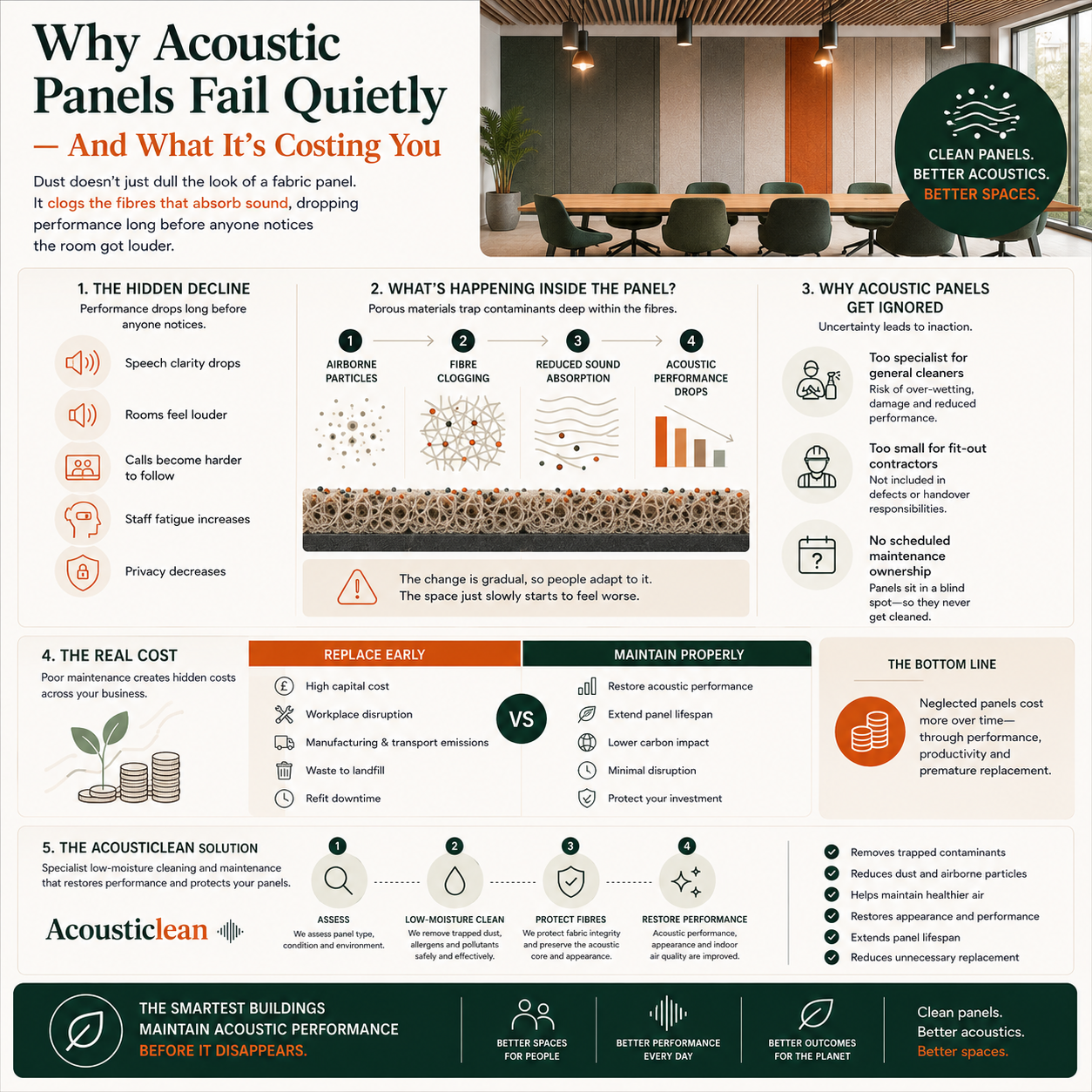
Acoustic panels are designed to capture sound waves within their fibres and surfaces. That porous structure is what makes them effective acoustically.
Unfortunately, it also makes them highly effective at trapping:
- Dust
- Allergens
- Airborne pollutants
- Moisture
- Odours
- Bacteria
- Microscopic debris
Over time, contaminants build up deep within the fabric weave and absorbing core of the panel — often completely unnoticed.
Unlike carpets or visible surfaces, acoustic systems are rarely included within standard maintenance schedules.
Most facilities teams focus on obvious cleaning priorities:
- Flooring
- Hard surfaces
- HVAC systems
- Washrooms
- Furniture
Acoustic panels typically sit in a maintenance blind spot.
The result? Years of contamination can quietly accumulate within the materials while the space itself gradually begins to feel less clean, less fresh, and less comfortable.
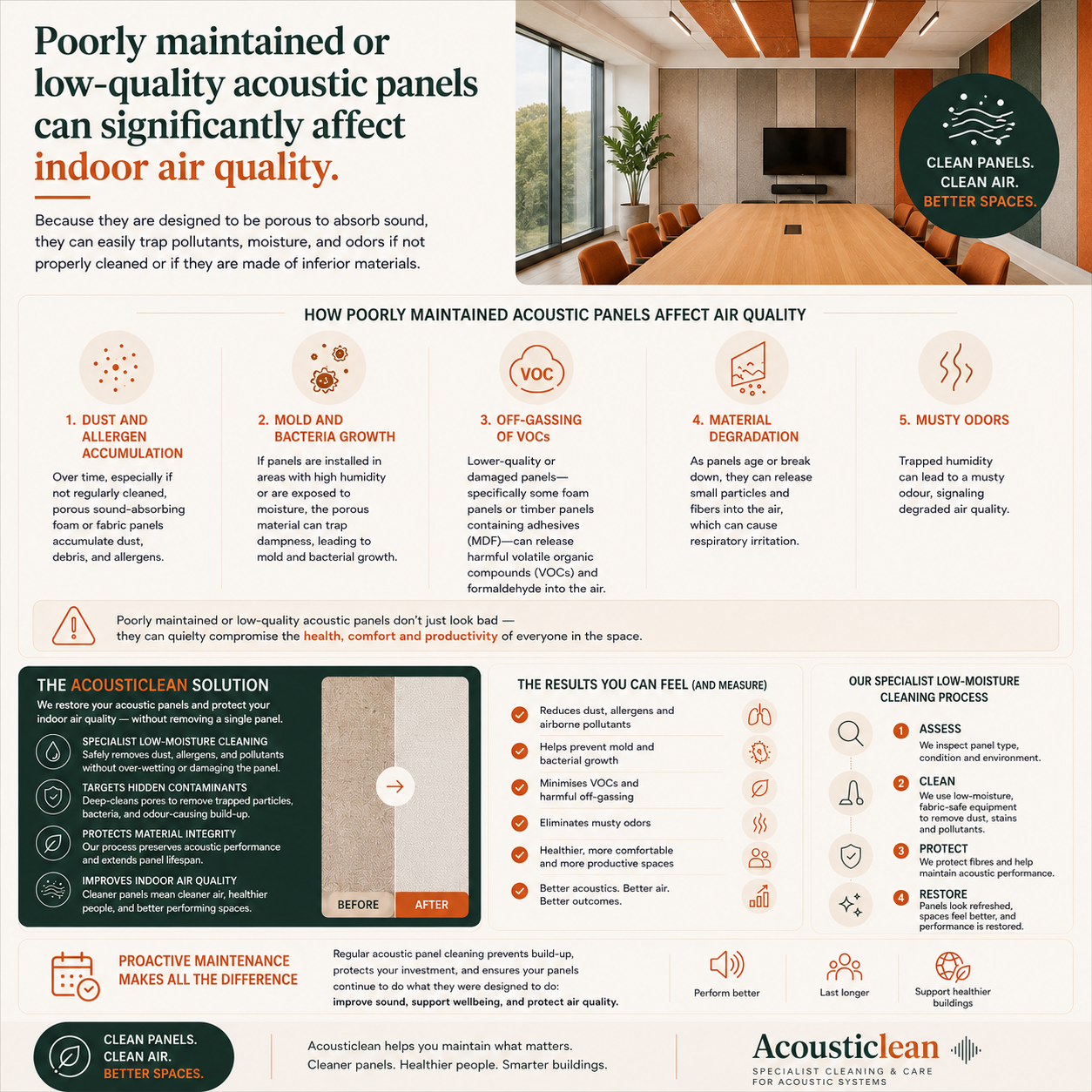
How Poorly Maintained Acoustic Panels Affect Indoor Air Quality
Dust and Allergen Accumulation
One of the most common issues we encounter is excessive dust and allergen build-up inside acoustic materials.
Fabric-wrapped panels, PET systems, ceiling baffles, and acoustic rafts all collect airborne particles over time. In busy workplaces with constant foot traffic and HVAC circulation, this accumulation happens faster than most people realise.
As dust becomes embedded within the fibres:
- Indoor air can feel heavier
- Allergens circulate more easily
- Surfaces feel harder to keep clean
- Occupant comfort can decline
And because the contamination is hidden inside the material, the issue often goes unnoticed until the environment starts to feel stale or tired.
Moisture, Humidity, and Mold Growth
Acoustic materials can also trap moisture. This becomes especially problematic in environments with:
- Poor ventilation
- High humidity
- HVAC issues
- Water ingress
- Condensation problems
- Sprinkler leaks or accidental flooding
When moisture becomes trapped inside porous acoustic materials, it can create the ideal environment for mold and bacterial growth.
In some cases, the first sign is simply a persistent musty odour within the space. In others, contamination may remain hidden deep within the acoustic core while continuing to affect the surrounding environment.
This is why specialist assessment and maintenance after water damage is critical. Replacing acoustic systems isn't always necessary — but leaving contaminated materials untreated can create ongoing environmental and performance issues.
VOC Off-Gassing From Low-Quality or Damaged Materials
Not all acoustic panels are manufactured equally.
Lower-quality foam products or timber-backed panels containing adhesives such as MDF can sometimes release volatile organic compounds (VOCs) and formaldehyde into the air — particularly as materials age, degrade, or become damaged.
Combined with dust accumulation and poor maintenance, this can contribute to poorer indoor environmental quality over time.
As workplaces increasingly focus on wellbeing, sustainability, and healthy building standards, indoor air quality is becoming far more important within facilities management and workplace design conversations.
Material Degradation and Fibre Breakdown
As acoustic panels age, neglected materials can begin to deteriorate physically. This may include:
- Fabric wear
- Fibre breakdown
- Surface distortion
- Acoustic core degradation
- Release of small airborne particles
Beyond appearance, degraded materials can also reduce acoustic performance and contribute to respiratory irritation in sensitive environments.
The issue is rarely sudden. It happens gradually over months and years — which is exactly why it is so commonly overlooked.
Why Acoustic Panel Maintenance Is So Often Ignored
The biggest issue isn't dirt. It's ownership.
Acoustic systems sit in an awkward space between specialist fit-out products and day-to-day facilities maintenance.
General cleaners often avoid them because they are concerned about:
- Over-wetting materials
- Damaging delicate fabric surfaces
- Distorting fibres
- Affecting acoustic performance
And rightly so. Standard wet-cleaning methods can absolutely damage acoustic materials if handled incorrectly.
As a result, many acoustic systems simply go untouched for years. Until eventually:
- Panels look visibly tired
- Odours become noticeable
- Air quality declines
- Performance drops
- Replacement feels like the only option
The Acousticlean Approach
At Acousticlean, we specialise in low-moisture acoustic panel cleaning and maintenance designed specifically for commercial acoustic systems.
Our process focuses on protecting both acoustic performance and indoor environmental quality — without unnecessary replacement.
Our specialist cleaning methods are designed to:
- Remove trapped dust and airborne contaminants
- Reduce allergen build-up
- Help minimise moisture-related contamination
- Protect fabric and acoustic core integrity
- Restore appearance
- Maintain long-term performance
- Extend panel lifespan
- Improve indoor air quality
Most importantly, our low-moisture methods avoid over-saturating materials — reducing risk while allowing panels to remain installed and operational with minimal disruption.
Healthier Buildings Start With Better Maintenance
Acoustic panels should improve the workplace environment — not quietly compromise it.
Cleaner acoustic systems contribute to:
- Better indoor air quality
- Improved workplace comfort
- Healthier environments
- Better acoustic performance
- Longer-lasting materials
- Reduced replacement waste
- More sustainable buildings
As businesses continue investing in workplace wellbeing and healthier commercial interiors, acoustic maintenance is no longer just about appearance. It's about building performance.
Because cleaner panels don't just look better. They create healthier, better-performing spaces for the people using them every day.