Low-moisture cleaning, explained for facilities managers
Why standard wet cleaning damages acoustic fabric, and how a low-moisture, plant-based method restores panels without disrupting the floor.
Acoustic panels are designed to manage sound — not moisture.
Yet in many buildings, when panels need cleaning, they’re treated like standard soft furnishings. The result? Over-wetting, fibre damage, and in some cases, permanent loss of acoustic performance.
For facilities managers, this creates a difficult balance: maintain cleanliness and compliance — without damaging high-value acoustic assets or disrupting operations.
This is where low-moisture cleaning comes in.
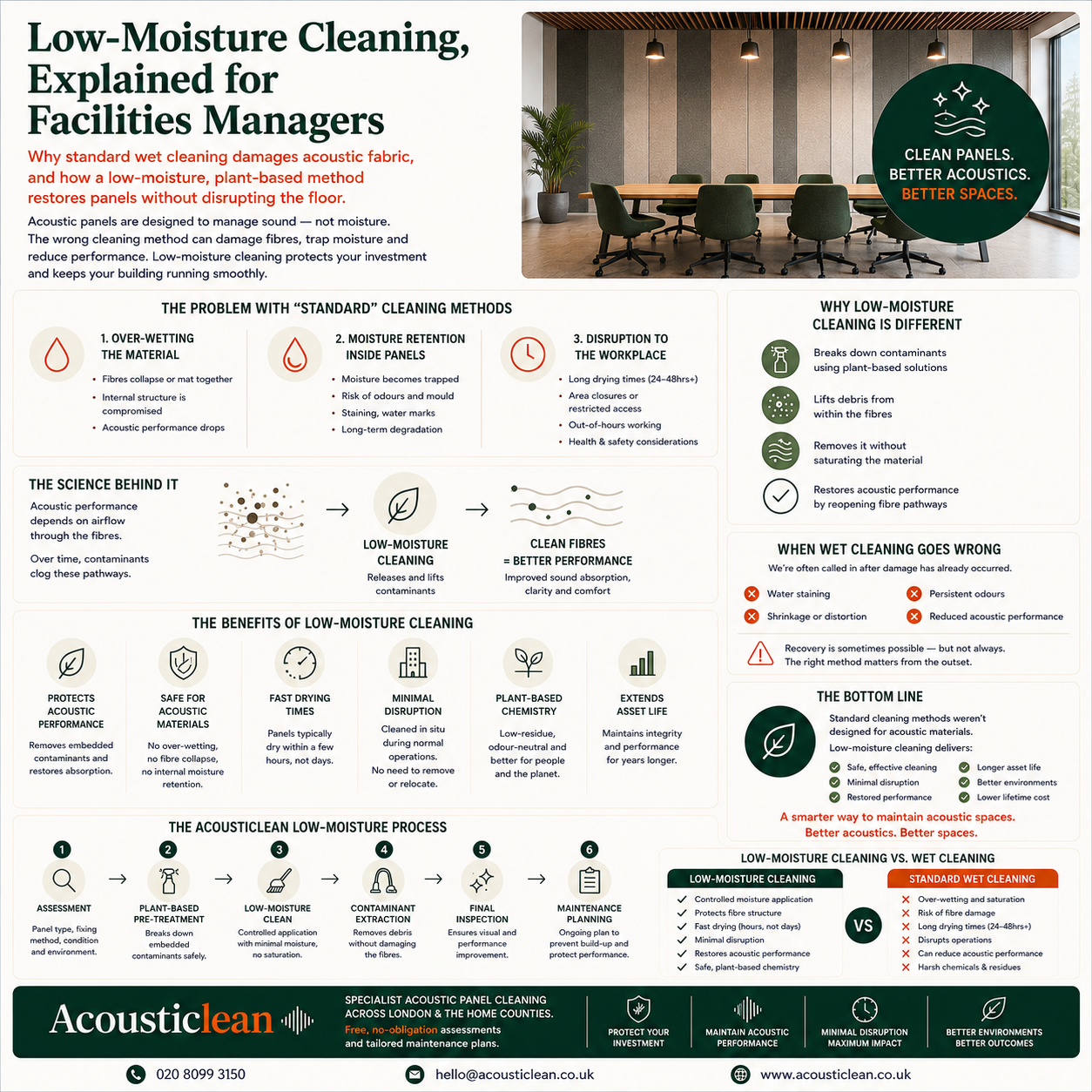
The Problem with “Standard” Cleaning Methods
Most general cleaning contractors default to one of two approaches:
- Heavy wet extraction (carpet-style cleaning)
- Surface wipe-down or spot cleaning
Neither is suitable for acoustic panels.
1. Over-Wetting the Material
Acoustic panels are typically made from porous, fibrous materials designed to trap and absorb sound waves.
When saturated with water:
- Fibres collapse or mat together
- Internal structure is compromised
- Drying becomes slow and inconsistent
This directly reduces acoustic performance.
2. Moisture Retention Inside Panels
Unlike carpets, panels are often:
- Wall-mounted
- Ceiling-fixed
- Backed with rigid cores or frames
This means moisture can become trapped internally, leading to:
- Odours
- Mould risk
- Staining and water marks
- Long-term degradation
And because the damage isn’t always visible immediately, problems often appear weeks later.
3. Disruption to the Workplace
Wet cleaning introduces operational challenges:
- Long drying times (24–48 hours+)
- Area closures or restricted access
- Out-of-hours scheduling
- Increased health & safety considerations
For busy commercial environments, this simply isn’t practical.
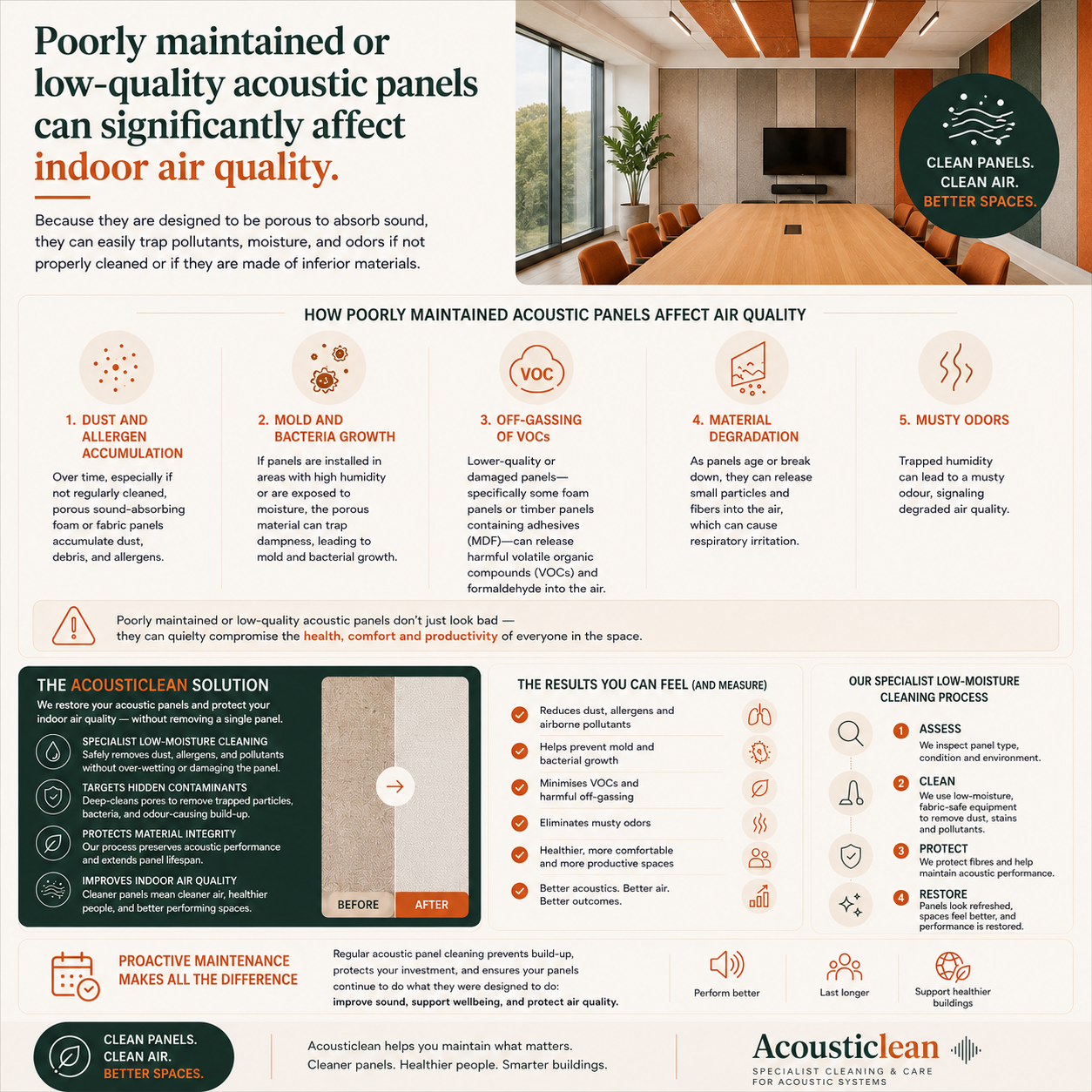
What Low-Moisture Cleaning Does Differently
Low-moisture cleaning is specifically designed for sensitive acoustic materials.
Instead of saturating the panel, it focuses on controlled application, contaminant release, and safe extraction.
At Acousticlean, the process is engineered to restore performance without introducing unnecessary moisture.
The Science Behind It
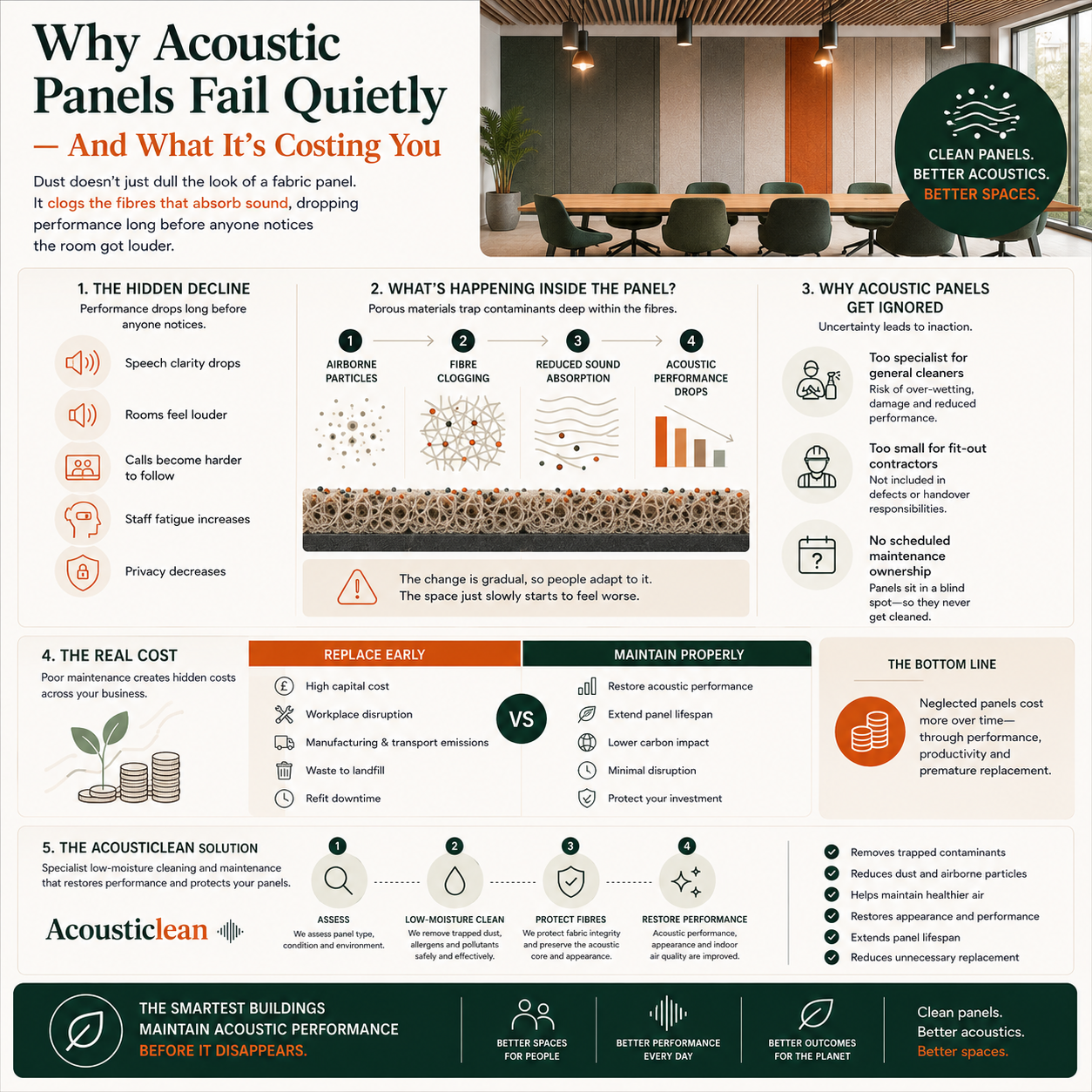
Acoustic performance depends on airflow through the fibres.
Over time, contaminants clog these pathways:
- Dust
- Airborne particulates
- Oils and pollutants
Low-moisture cleaning works by:
- Breaking down contaminants using plant-based solutions
- Lifting debris from within the fibres
- Removing it without saturating the material
The goal isn’t just to clean the surface — it’s to reopen the fibre structure.
Why Plant-Based Chemistry Matters
Not all cleaning solutions are equal.
Harsh chemicals can:
- Leave residues that attract more dirt
- Affect fabric integrity
- Introduce unwanted odours
- Conflict with indoor air quality policies
Acousticlean uses plant-based, low-residue formulations that:
- Break down contaminants effectively
- Rinse clean without build-up
- Support healthier indoor environments
- Align with ESG and sustainability targets
This is particularly important in:
- Offices
- Educational spaces
- Healthcare environments
- High-occupancy commercial buildings
Minimal Moisture, Maximum Control
The key advantage of low-moisture cleaning is control.
Instead of flooding the material, we apply:
- Targeted solution application
- Controlled agitation
- Specialist extraction methods
This ensures:
- No over-wetting
- No fibre collapse
- No internal moisture retention
Panels are typically dry within a few hours, not days.
Designed for Live Environments
For facilities managers, disruption is often the biggest constraint.
Low-moisture cleaning is built around operational reality:
- Panels cleaned in situ (no removal required)
- Work carried out during normal hours where needed
- Minimal noise and disturbance
- Fast turnaround times
In most cases, there’s no need to shut down areas or relocate teams.
Protecting Acoustic Performance — Not Just Appearance
One of the biggest misconceptions is that panel cleaning is purely cosmetic. It’s not.
A properly maintained panel:
- Absorbs sound effectively
- Supports speech clarity
- Reduces reverberation
- Improves overall workplace comfort
Low-moisture cleaning restores this performance by:
- Removing embedded contaminants
- Reopening fibre pathways
- Maintaining material integrity
This is the difference between clean-looking panels and working panels.
Extending Asset Life
Acoustic panels are a capital investment.
Without maintenance, they gradually:
- Lose performance
- Look worn
- Get flagged for replacement
Low-moisture cleaning extends lifespan by:
- Preventing fibre degradation
- Avoiding water damage
- Maintaining consistent performance
In many cases, panels can remain in service years longer than expected.
When Wet Cleaning Goes Wrong
We’re often called in after issues have already occurred:
- Water staining
- Shrinkage or distortion
- Persistent odours
- Reduced acoustic performance
In these cases, recovery is sometimes possible — but not always.
That’s why method selection matters from the outset.
The Acousticlean Approach
Acousticlean specialises in low-moisture acoustic panel cleaning designed for commercial environments.
Our process includes:
- Assessment – panel type, fixing method, contamination level
- Plant-based pre-treatment – breaks down embedded contaminants safely
- Low-moisture clean – controlled application with no saturation
- Contaminant extraction – removes debris without damaging fibres
- Final inspection – ensures both visual and performance improvement
- Maintenance planning – prevents future build-up and performance loss
The Bottom Line for Facilities Managers
Standard cleaning methods weren’t designed for acoustic materials.
Using them creates risk:
- Performance loss
- Material damage
- Operational disruption
Low-moisture cleaning avoids all three.
It delivers:
- Safe, controlled cleaning
- Fast drying times
- Minimal disruption
- Restored acoustic performance
- Extended panel lifespan
A Smarter Way to Maintain Acoustic Spaces
Acoustic environments don’t just affect comfort — they affect productivity, communication, and wellbeing.
Maintaining them properly isn’t optional — it’s operational.
Low-moisture cleaning provides a way to:
- Protect your investment
- Maintain performance
- Avoid unnecessary replacement
- Keep buildings running smoothly
Book a Specialist Assessment
If your acoustic panels haven’t been professionally cleaned — or you’re unsure how they’ve been treated in the past — it’s worth getting them assessed properly.
Acousticlean provides specialist low-moisture acoustic panel cleaning across London and the Home Counties.
Get in touch for a free, no-obligation assessment and see how low-moisture cleaning can restore performance without disruption.